
Florence Duomo
Top 10 Tips for visiting Duomo di Milan
Explore the Duomo di Milano, sometimes called the city’s throbbing heart. The recognizable Gothic cathedral s
jitender·1 min read


Apurva Sinha
·5 min read
The Duomo of Florence, officially known as the Cattedrale di Santa Maria del Fiore, is one of the world’s most iconic and magnificent cathedrals.
This grand Renaissance church, with its magnificent dome engineered by the genius Filippo Brunelleschi, has been a symbol of the city of Florence for centuries.
The history of the cathedral dates back to the late 13th century when the city’s merchant decided to construct a new cathedral to replace the ancient church of Santa Reparata.
From the submission of the designs to the cathedral’s resurrection, this article shares all the details about the history of the Duomo Florence.
Here is the Duomo Florence History timeline in brief:
Let us now learn about Duomo Florence’s history in detail to understand the events that led to the Duomo becoming the marvelous structure it is today.
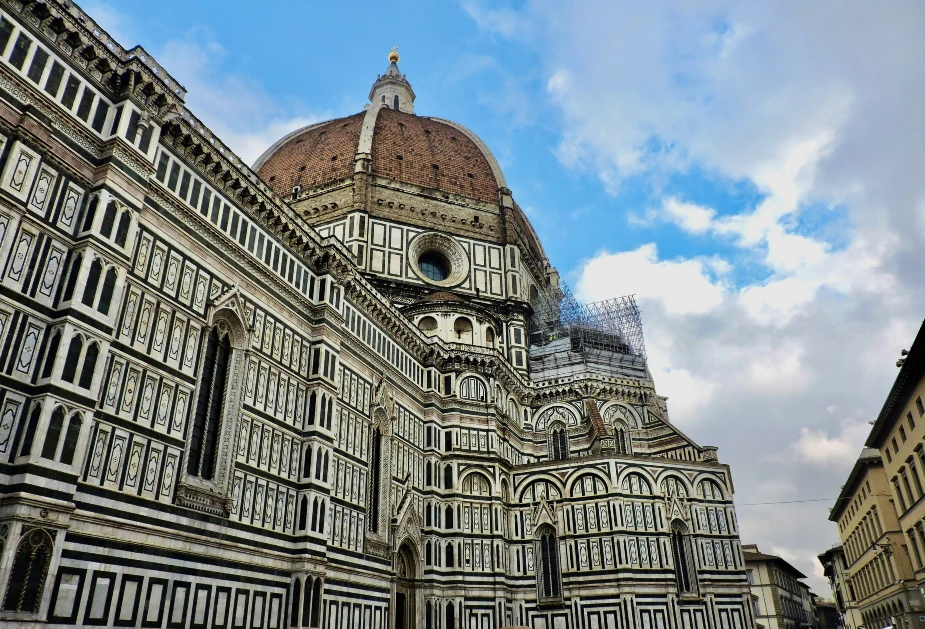
Several people are unaware that the Duomo Florence is not the first religious structure to stand on the site.
Before the Duomo Florence, or the Cathedral of Santa Maria del Fiore, was constructed, an older church named San Reparata stood on the site.
Florence was emerging as a major European city and naturally experienced a cultural and financial renaissance fueled by two industries, the wool and banking industries.
The Wool Merchants Guild spearheaded the construction of a new cathedral that would replace the older San Reparata.
This undertaking led to rapid urban transformation, demolition of existing structures, and rerouting Florencia streets.
As mentioned in the brief timelines above, in 1296, the Cathedral’s construction commenced with Arnolfo di Cambio as the first copamastro or designer or architect.
However, this role suffered instability, rivalry, and corruption for centuries.
Cambio’s death paved the way for figures like Talenti, Giovanni Ghini, and Brunelleschi to take charge of the model.
A model competition was organized in 1366 to finalize the cathedral’s design.
The winning model focused on shape and scale, laying the foundation for future capomastros.
Adjacent to the cathedral is a 280-foot-tall Campanile, or bell tower, a significant engineering feat.
It was completed in 1359, around two decades after the construction and featured octagonal buttresses, graduated orders, and openings for the bell operation.
Cathedral construction also faced several hurdles, such as the missing dome.
Other challenges included its construction without centering or external buttressing.
The winning proposal from the competition, organized to attain realistic solutions, came from Filippo Brunelleschi, a Florentine goldsmith.
Brunelleschi presented a self-supporting dome design that also adhered to the 1366 model.
His innovative design made him the competition’s winner.
Brunelleschi’s dome design featured a double-shell dome, with the exterior resembling the 1366 model.
The interior is a hemispherical dome, and the need for centering was eliminated during the construction.
Brunelleschi also incorporated compression rings and a unique brick pattern.
Brunelleschi completed the dome by 1436 despite numerous challenges and difficulties.
The structure’s white and green marble exterior likely followed the reconstruction.
The cathedral’s interior referenced the Pantheon.
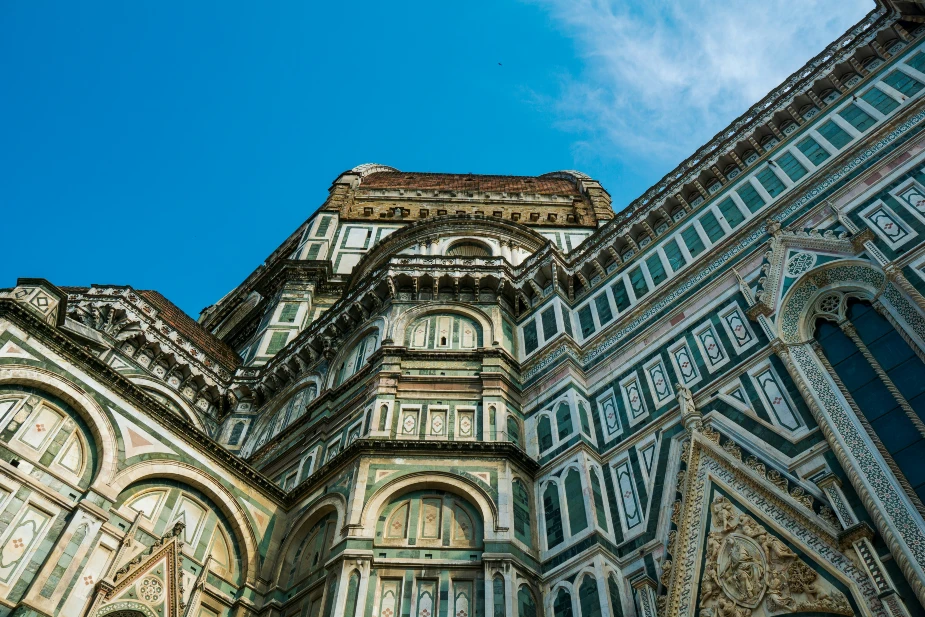
The Duomo Florence history also includes critique post-construction.
The Duomo Cathedral is an engineering marvel, but it faced criticism for its interior space, which was said to be underwhelming.
The exterior of Duomo Florence’s aesthetics surpassed the interior’s execution, and people did not feel impressed.
People criticized the dark and dimly lit interior, which, coupled with seemingly flat finishes, raised concerns about Duomo Florence’s atmosphere.
The architecture focused on eliminating buttressing, which is said to have compromised natural light.
Eyebrows were raised about the engineering marvel as cracks started appearing almost immediately after construction.
Since 1989, observations have highlighted four fissures from the dome’s top to the church foundations.
This discovery prompted 300 monitoring devices to be attached to the dome of the Duomo Florence.
Pier Luigi Nervi observed in 1934 that the cracks in Duomo Florence’s dome opened and closed with the season.
The cracks expensed in the winter and closed during the summer.
1. What is the history of Duomo Florence?
The Duomo Florence Cathedral stands on the site of a former cathedral, the San Reparata. Today’s Cathedral is a significant historical and cultural landmark in Italy and a major tourist attraction, with over four million visitors visiting annually.
2. How long does the Duomo Florence history date back?
The history of Duomo Florence dates back to 1926 when Cambio submitted the Cathedral’s design and its construction began.
3. Are there any historical figures associated with the Duomo Florence?
Two significant figures associated with the history of Duomo Florence are Arnolfo di Cambio and Filippo Brunelleschi, who served as the two major architects. Brunelleschi designed the dome, which is also called Brunelleschi’s dome. Other historical figures include Francesco Talenti and San Giovanni.
Featured Image:Andrea Woods on Unsplash
Explore the Duomo di Milano, sometimes called the city’s throbbing heart. The recognizable Gothic cathedral s

Florence Cathedral, or Duomo Florence, is one of the largest cathedrals in the world. Commonly known as Santa Mari

Choosing between Duomo Florence and Duomo di Milano is like being asked to pick your favourite child. Duomo Florence and